Run utility-scale quantum dynamics simulations with the new Dynamics Simulator Qiskit Function

Better batteries, cleaner catalysts, and new materials for the energy sector all depend on understanding how electrons behave inside a material. Simulating that behavior takes enormous computing power. Research has estimated that roughly one-third of the world's supercomputer time already goes to chemistry and materials simulation.
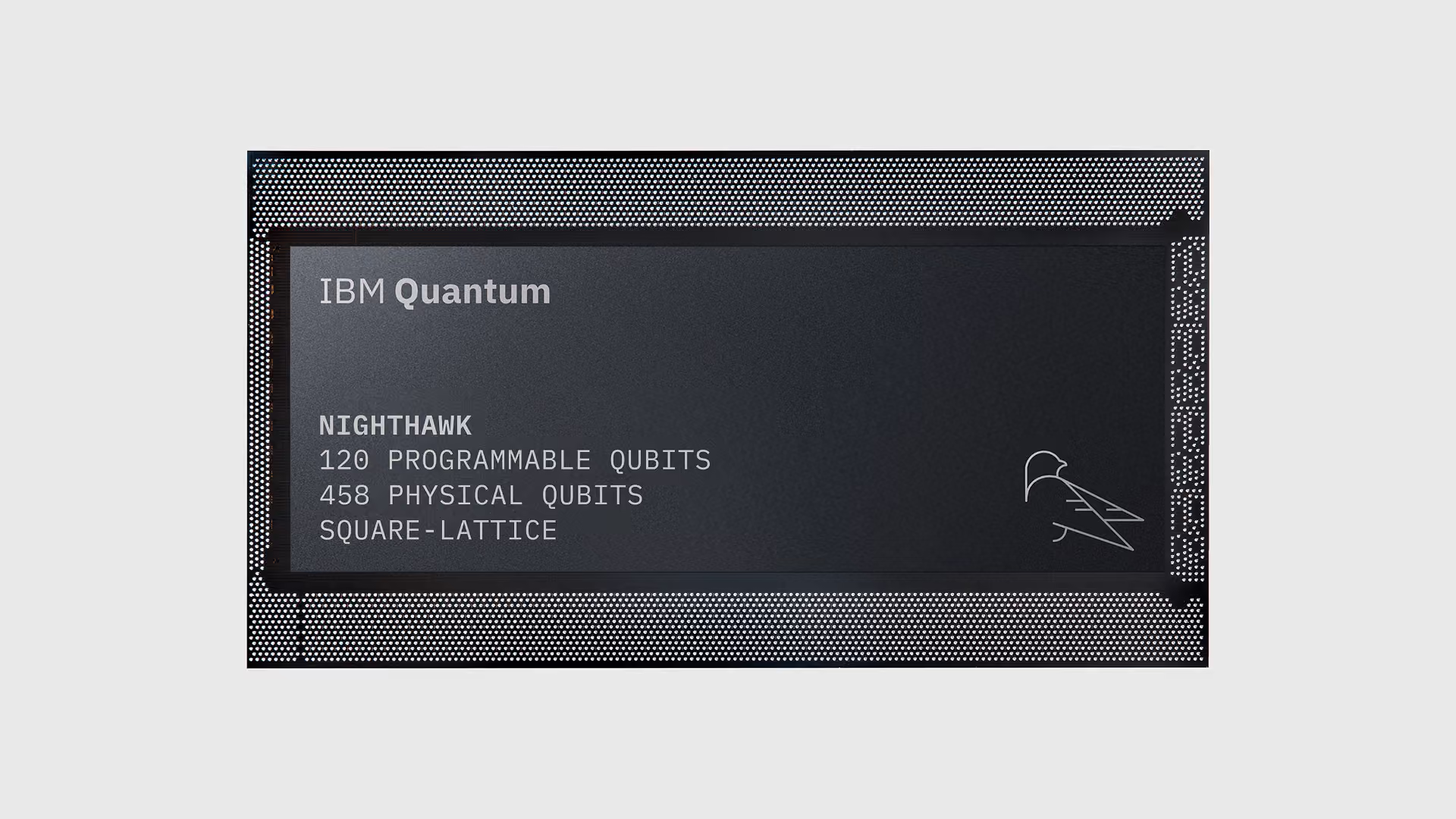
Earlier this year, Q-CTRL showed that you can now run these simulations on a real quantum computer faster than the best classical tools researchers use today, with the same accuracy. Running Fire Opal on the IBM Quantum Platform delivered Practical Quantum Advantage on a real materials-science problem, completing the simulation up to 3,000 times faster than industry-standard classical software, based on industry benchmarks. And on the latest IBM Quantum Nighthawk processor, that same breakthrough benchmark workflow now runs another 12 times faster than on IBM Quantum Heron r3, continuing to outpace classical advancements that have followed our announcement.
With these developments, quantum computers are now consistently orders of magnitude faster than state-of-the-art classical software for these critical quantum-dynamics problems.
Today, we're putting that capability in the hands of the IBM Quantum Qiskit community. No specialist knowledge of building simulation packages required. You define the physics you want to investigate, and the Dynamics Simulator handles circuit design, hardware mapping, and error suppression in one fully automated pipeline, with no extra overhead.
Q-CTRL's Dynamics Simulator is now available in IBM’s Qiskit Functions Catalog to users with Premium or Flex Plan access to IBM’s quantum computers. It's the third Q-CTRL function in the catalog, alongside our Performance Management and Optimization Solver functions, and the first built specifically for materials and chemistry research.
Take materials simulation further on real quantum computers
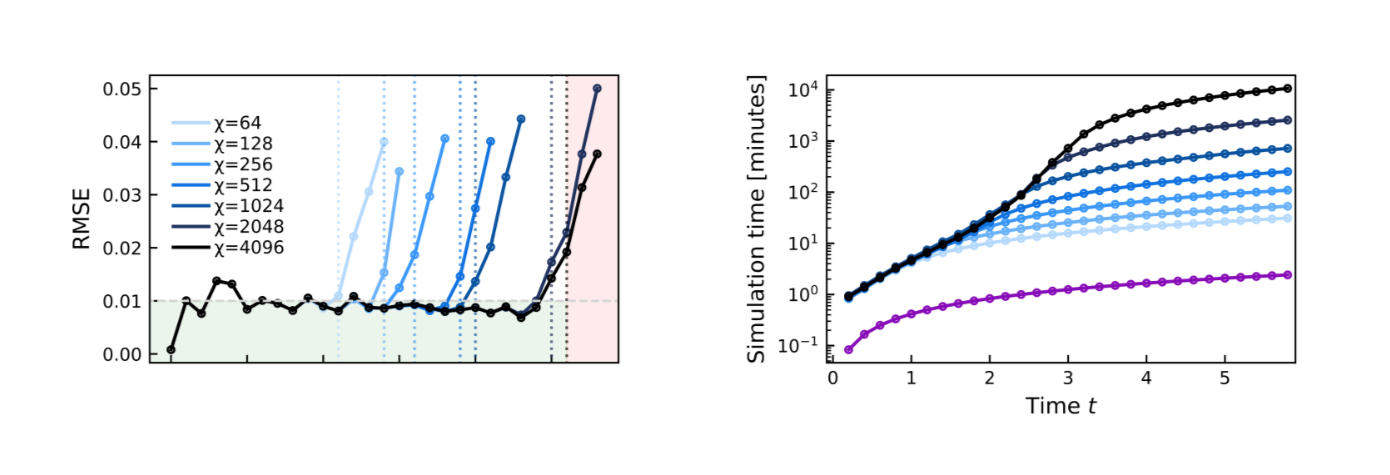
Tensor-network solvers remain the trusted benchmark for simulating many-body dynamics in materials science and condensed matter physics, but their runtime grows substantially with “resolution”, system size, and evolution time.
Quantum processors can make these simulations efficient because qubits follow the same quantum rules as the electrons being modeled. The challenge is that every additional time slice requires more quantum logic gates, and running deep circuits with high performance and fidelity is very challenging due to errors that plague the hardware. This is Fire Opal’s home turf. It executes these deep circuits quickly and accurately through fully automated error suppression. High-fidelity circuit execution is the foundation for everything the Dynamics Simulator Qiskit Function delivers.
Introducing the Dynamics Simulator Qiskit Function powered by Fire Opal
If you've built a Trotterized circuit in Qiskit, you know how many critical, error-prone decisions sit between a Hamiltonian and a reliable execution. You are forced to optimize across entirely different domains at once, including choosing a fermion encoding, setting the step count, fitting the circuit to the device's physical qubit layout, and tailoring an error-handling strategy. Any one of these requires deep expertise in not only quantum circuit design but also hardware-specific compilation and execution. Researchers consistently deal with significant friction to optimize across every task, so the Dynamics Simulator simplifies these steps while maintaining high-quality results.
- No circuit design: Define a 1D Fermi-Hubbard model with site-by-site hopping, interaction, and on-site potentials, plus your initial state and observables. Our Dynamics Simulator compiles it into efficient circuits.
- No quantum hardware expertise: Fire Opal lays out the Trotter steps and automatically fits the workload to your chosen IBM backend.
- Fully automated error suppression, with zero shot overhead: Fire Opal's deterministic error suppression is built into the pipeline and prevents errors during execution. There's nothing extra to configure, and no added shots to slow you down as your problems scale.
It's the same pipeline behind Q-CTRL's record-setting results on IBM quantum computers—from quantum simulation to the quantum Fourier transform—now available to you directly in the Qiskit Functions Catalog.
Get speed and accuracy on IBM quantum computers, all in a single function call
With the Dynamics Simulator Qiskit Function, you don't have to trade accuracy for speed. In our published manuscript, Fire Opal running on an IBM Heron r3 processor (ibm_boston):
- Simulated a 60-site system on 120 qubits, well beyond the reach of exact classical simulation.
- Matched high-accuracy classical simulations to within about 1% root-mean-square error (RMSE), and was validated by multiple external teams.
- Set a record for circuit complexity, having directly observed spin-charge separation using up to 90 Trotter steps, more than 10 times larger than previous quantum computer results, and using up to 13,000 two-qubit gates.
- Ran up to 3,000 times faster than an optimized tensor-network simulation using ITensor, the industry-standard package, cutting runtime from 100 hours down to two minutes.
See these results presented at IBM Think 2026.
Run 12 times faster on IBM Quantum Nighthawk
Q-CTRL recently reproduced this simulation on the new IBM Nighthawk r2 processor (ibm_phoenix), using a 30-site (60-qubit) system across 30 Trotter steps.
- QPU execution speed increased 12 times, running the full pipeline in 23 seconds versus 4 minutes 25 seconds for the same workload on IBM Heron r3.
- Calculation completed more than 400 times faster than the fastest GPU-accelerated classical result.
- Achieved the same high accuracy, with less than 1% deviation from the IBM Heron r3 baseline.
What researchers are saying
Researchers around the world trust Fire Opal to deliver the best results for their most challenging problems. With the new Fire Opal Dynamics Simulator Qiskit Function, we’re thrilled to support a new group of researchers in materials science and chemistry to push the limits in their fields.
As a PhD candidate applying Krylov methods at Mizzou’s Quantum Innovation Center, I’m eager to use Q-CTRL’s Dynamics Simulator Function in my research. Simulating 120-qubit Fermi-Hubbard models with the impressive speedup compared to classical compute and bypassing classical TDVP entanglement limits are critical steps forward for exploring problems in condensed matter that are intractable on classical computers.Matthew Bruenning, PhD Candidate, University of Missouri (Mizzou), Quantum Innovation Center
Demonstrating large-scale real-device simulations of the dynamics of fermionic physical models represents a significant advance for materials science in quantum computing. It also indicates that error suppression will become increasingly important in the years ahead. I look forward to continued collaboration with Q-CTRL and growing our use of Fire Opal in our ongoing and future projects.Shu Kanno, Scientist, Mitsubishi Chemical Corporation
Accelerating drug discovery and chemistry requires modeling molecular behaviors at a level of precision that classical supercomputers struggle to reach in reasonable time. C-DAC's focus on quantum chemistry, specifically reaction mechanisms for API synthesis, catalytic transformations, and polymorph stability, demands high-accuracy, high-speed computational tools. Leveraging Fire Opal's new simulation function and error-management capabilities allows us to confidently explore electronic structures and drug-target interactions, turning theoretical quantum chemistry into an active, high-throughput research engine.Vivek Nainwal, Scientist, Centre for Development of Advanced Computing (C-DAC)
Start simulating materials physics on IBM quantum computers today
Whether you’re exploring battery materials, catalysts, or new energy-transfer regimes, you can now study fermionic many-body dynamics at scales where leading classical methods become costly, without building a single quantum circuit by hand.
Dynamics Simulator is available now to IBM Quantum Platform Premium and Flex Plan users.
Learn how it works in the user guide, and get started today through the Qiskit Functions Catalog.